A 35 Whelen Ballistics Chart is a comprehensive visual data table that details the velocity, energy, and trajectory of factory ammunition across varying distances for this specific rifle caliber. This specialized tracking template shows exactly how different bullet weights drop and lose velocity as they travel downrange. Hunters rely heavily on these ballistics charts to predict real world field performance, determine their maximum effective range, and establish precise aiming points for big game hunting.
35 Whelen Ballistics Chart
| Manufacturer | Bullet Weight | Bullet Type | Ballistic Coefficient | Sectional Density | Muzzle Velocity | Velocity At 100 Yards | Velocity At 200 Yards | Velocity At 300 Yards | Velocity At 400 Yards | Velocity At 500 Yards | Muzzle Energy | Energy At 100 Yards | Energy At 200 Yards | Energy At 300 Yards | Energy At 400 Yards | Energy At 500 Yards | Trajectory At 100 Yards | Trajectory At 200 Yards | Trajectory At 300 Yards | Trajectory At 400 Yards | Trajectory At 500 Yards |
| Hornady | 200 Grain | SP InterLock | 0.282 | 0.223 | 2910 | 2585 | 2283 | 2001 | 1742 | 1509 | 3760 | 2968 | 2314 | 1778 | 1347 | 1012 | 1.9 | 0.0 | -8.6 | -25.9 | -54.8 |
| Federal | 200 Grain | Fusion Bonded | 0.360 | 0.223 | 2800 | 2540 | 2295 | 2060 | 1840 | 1635 | 3478 | 2865 | 2338 | 1885 | 1505 | 1185 | 1.8 | 0.0 | -7.9 | -24.1 | -51.2 |
| Remington | 200 Grain | Core Lokt SP | 0.192 | 0.223 | 2675 | 2260 | 1880 | 1545 | 1270 | 1080 | 3177 | 2268 | 1570 | 1060 | 715 | 518 | 2.4 | 0.0 | -11.8 | -37.8 | -86.5 |
| Remington | 250 Grain | Core Lokt SP | 0.275 | 0.279 | 2400 | 2160 | 1935 | 1725 | 1530 | 1360 | 3197 | 2590 | 2078 | 1652 | 1300 | 1026 | 3.1 | 0.0 | -12.4 | -37.6 | -82.1 |
| Nosler | 225 Grain | AccuBond | 0.421 | 0.251 | 2750 | 2540 | 2340 | 2150 | 1970 | 1795 | 3778 | 3222 | 2735 | 2309 | 1938 | 1610 | 1.7 | 0.0 | -7.1 | -21.4 | -44.5 |
| Nosler | 250 Grain | Partition | 0.444 | 0.279 | 2550 | 2360 | 2180 | 2005 | 1840 | 1685 | 3610 | 3091 | 2638 | 2231 | 1879 | 1576 | 2.1 | 0.0 | -8.2 | -24.3 | -49.8 |
| Barnes | 180 Grain | TTSX BT | 0.295 | 0.201 | 2900 | 2590 | 2300 | 2030 | 1780 | 1550 | 3361 | 2681 | 2114 | 1647 | 1266 | 960 | 1.6 | 0.0 | -7.8 | -24.2 | -52.8 |
| Barnes | 200 Grain | TSX FB | 0.284 | 0.223 | 2800 | 2490 | 2200 | 1930 | 1680 | 1460 | 3481 | 2753 | 2149 | 1654 | 1253 | 946 | 1.8 | 0.0 | -8.4 | -26.1 | -56.5 |
| Buffalo Bore | 225 Grain | Sierra SBT | 0.370 | 0.251 | 2800 | 2580 | 2370 | 2170 | 1980 | 1800 | 3916 | 3325 | 2805 | 2352 | 1958 | 1618 | 1.6 | 0.0 | -7.2 | -21.6 | -44.8 |
| Buffalo Bore | 225 Grain | Barnes TSX | 0.359 | 0.251 | 2650 | 2435 | 2230 | 2035 | 1850 | 1680 | 3508 | 2961 | 2484 | 2068 | 1710 | 1410 | 1.9 | 0.0 | -8.2 | -24.6 | -50.9 |
| Norma | 250 Grain | Oryx Bonded | 0.315 | 0.279 | 2500 | 2270 | 2050 | 1845 | 1655 | 1480 | 3470 | 2860 | 2332 | 1889 | 1520 | 1216 | 2.4 | 0.0 | -10.4 | -31.6 | -66.4 |
| Underwood | 220 Grain | Lehigh Controlled Chaos | 0.380 | 0.246 | 2700 | 2490 | 2290 | 2100 | 1920 | 1750 | 3561 | 3028 | 2560 | 2154 | 1800 | 1496 | 1.8 | 0.0 | -7.6 | -22.8 | -47.2 |
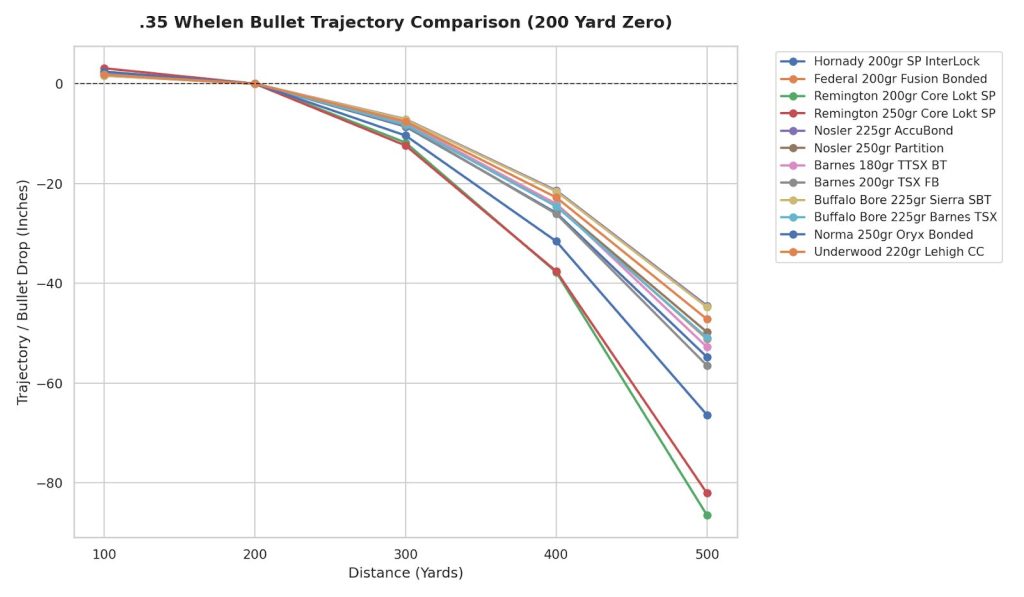
To read this chart effectively, look at how the physical bullet design alters speed decay and downrange punch across distances. Every load in this list uses a 200 yard zero distance, meaning the path crosses your point of aim exactly at 200 yards.
Understanding The Chart
Muzzle Velocity
Muzzle velocity specifies the speed of the projectile the moment it exits the crown of the rifle barrel. This measurement is expressed in feet per second.
Lighter bullets achieve higher initial muzzle speeds from the bottlenecked parent casing. Heavy projectiles exit at a slower rate but maintain momentum over longer flights.
Retained Velocity
Retained velocity documents how much forward speed a bullet maintains as air friction pushes against it. Slippery bullet profiles resist drag much better than flat nose bullets.
Sustaining velocity downrange keeps the bullet stable through high speed flight paths. It also guarantees the projectile travels fast enough to expand reliably when hitting target animals.
Kinetic Energy
Kinetic energy measures the raw striking muscle of the projectile, calculated in foot pounds of force. Heavy bullets combined with fast speeds yield huge muzzle energy numbers.
The medium bore diameter transfers this massive striking punch directly into game animals. Retaining energy downrange creates deep penetration and breaks dense skeletal structures easily.
Trajectory
Trajectory charts the continuous curved flight path of the bullet as gravity pulls it down toward the ground. A 35 Whelen trajectory chart shows relatively steep drop curves past moderate distances.
Understanding total bullet drop prevents clean misses or poor wounding hits on distant big game. Knowing the drop values helps hunters offset the curved flight by aiming slightly higher.
Ballistic Coefficient
Ballistic coefficient measures how efficiently a specific bullet shape slices through atmospheric air resistance. Higher decimal values indicate a highly streamlined projectile shape.
Most medium bore bullets feature stubby profiles that produce lower numbers than skinny projectiles. Premium boat tail options help maximize this value to flatten out the flight arc.
Sectional Density
Sectional density compares the total weight of a bullet against its overall outer diameter. Higher values for a given caliber directly indicate superior deep penetration potential through tissue.
The long heavy options in this caliber carry impressive sectional density numbers. This physical trait allows the non magnum round to push through thick muscle and heavy bone.
Common 35 Whelen Bullet Weights
180 Grain
The 180 grain option represents the lighter end of commercial hunting options for this medium bore rifle. It works best for hunting open country pronghorn, medium sized whitetail deer, and light feral hogs.
The primary advantages include exceptionally low recoil, fast muzzle speeds, and very flat trajectories out to moderate ranges. The distinct disadvantage is rapid downrange velocity loss due to low aerodynamic efficiency. Typical factory loads generate muzzle speeds around 2900 feet per second. They deliver a crushing muzzle energy output of roughly 3360 foot pounds.
200 Grain
The 200 grain weight stands as the standard versatile baseline option across the entire industry. It excels for general deer hunting, black bear baiting, and close quarters wild hog control.
The advantages are great ammunition availability, balanced terminal shock, and excellent velocity inside normal hunting distances. The downside is poor wind resistance at distances past 250 yards due to stubby blunt shapes. Typical velocity clocks in at a quick 2800 to 2910 feet per second at exit. Typical energy values hover around 3470 to 3760 foot pounds at the muzzle.
225 Grain
The 225 grain projectile is considered by many professional marksmen to be the absolute sweet spot. It is optimized for large bull elk, massive moose, and coastal brown bears.
The main advantages are superb aerodynamic shapes, high sectional density, and incredible energy retention downrange. The single notable disadvantage is stepped up physical recoil over lighter options. You can expect a typical muzzle velocity of 2650 to 2800 feet per second. This delivers an immense muzzle energy ranging from 3500 to 3910 foot pounds.
250 Grain
The heavy 250 grain option brings maximum hard hitting stopping force to the table. It is primarily used for deep woods moose hunting, huge bison, and dangerous grizzly bears.
The clear advantages are unstoppable straight line penetration and maximum bone shattering capabilities. The disadvantages include a very loopy rainbow flight trajectory and stiff rifle recoil. Typical factory loads move along at a steady 2400 to 2550 feet per second. They supply an impressive 3190 to 3610 foot pounds of initial bone breaking muzzle energy.
Effective Range
Deer
The practical effective range on whitetail and mule deer spans out to 400 yards. The bullet retains more than enough speed and energy to expand widely at this range. Mid weight loads keep the point of impact manageable within this distance bracket.
Elk
For mature bull elk, the maximum ethical limit drops to roughly 350 yards. This restriction ensures the slowing projectile still hits with 1500 foot pounds of muscle. It provides clean vitals expansion through heavy ribs.
Moose
Moose present large vital zones but require immense structural damage to stop quickly. The effective range on these huge cervids finishes at 300 yards. Heavy premium structures are required to maximize terminal performance at extended lines.
Black Bear
Large black bears are effectively taken anywhere from the muzzle out to 300 yards. Close range bait setups maximize the massive initial diameter of the slug. Distant mountain hunting requires precise tracking of the wind drift.
Wild Hog
Feral hogs can be dropped out to 350 yards using aerodynamic tip choices. Thick shoulder shields on big boars melt away under the high frontal mass. Short hand rifles handle this task beautifully inside heavy timber.
Long Range Target Shooting
This specific heavy caliber is not built for competitive long range steel shooting. Low ballistic coefficients make tracking targets past 500 yards incredibly difficult. The heavy recoil fatigue will also quickly degrade tight group shooting consistency.
Best Hunting Uses
The legendary reputation of this cartridge stems from its uncompromised efficiency on North American big game. It uses the standard long action platform to punch way above its weight class.
Whitetail hunters love how it completely anchors large bucks without damaging excessive amounts of edible meat. Mule deer hunters utilize its flat short range arc to safely harvest deer across steep canyons.
Elk and moose hunters view this round as a premier choice for thick timber tracking. It hits with authority from steep angles, driving straight through heavy muscle to reach the vitals.
Black bear and wild boar hunters lean on the wide frontal diameter to leave massive exit wounds. These large holes create clear, short blood trails that end quickly in thick brush. It provides real magnum stopping performance without requiring an oversized magnum action.
Factors That Affect 35 Whelen Ballistics
Barrel Length
Standard factory ammunition achieves listed velocities using a 24 inch test barrel. Shorter 20 inch custom tracking barrels handle beautifully in brush but lose velocity. Expect to drop roughly 25 feet per second for every inch of barrel removed.
Bullet Weight
Light options step up initial speed but lose their energy very quickly downrange. Heavy choices start slower but resist air drag much better over distance. Choosing the proper weight dictates your maximum operating range.
Bullet Construction
Soft lead points expand very quickly on light game but can break up early. Solid copper and bonded options hold together to smash through thick shoulder bone. Monolithic tipped options help flatten out trajectories.
Altitude
Shooting at high mountain elevations thin air resistance out significantly. This drop in density helps the blunt bullet retain speed much better than at sea level. Your long distance drops will be less severe up high.
Temperature
Frigid hunting environments can reduce the burning efficiency of gunpowder inside the casing. This change drops muzzle velocity and alters your known long distance point of impact. Modern high performance powders help minimize this temperature variance.
Wind
The wide cross section of a medium bore projectile acts like a sail. Strong crosswinds will push these low efficiency bullets sideways quite rapidly. Hunters must carefully read wind speed to avoid missing target vitals.
Zero Distance
Your choice of sight zero completely shapes the usable mid range trajectory arc. An improper zero can cause you to overshoot small targets at close distances. It directly controls your maximum point blank range.
Best Zero Distance
100 Yard Zero
A 100 yard zero keeps your close range impacts incredibly precise and easy to manage. The major disadvantage is that the bullet drops rapidly past 150 yards. This setup forces you to hold high or dial your scope turret quickly for moderate field shots.
200 Yard Zero
A 35 Whelen Ballistics Chart 200 Yard Zero is highly favored by global big game hunters. The bullet rises roughly two inches at mid range and drops predictably past the zero point. It allows dead on aiming without guesswork out to 250 yards.
250 Yard Zero
Extending your primary zero to 250 yards stretches your total maximum reach out further. However, the bullet will now peak nearly four inches high at mid range distances. This tall arc introduces a real risk of sailing cleanly over a deer back.
35 Whelen Compared To Similar Cartridges
| Cartridge | Velocity | Energy | Trajectory | Recoil | Effective Hunting Range | Large Game Performance |
| 35 Whelen | Moderate | High | Medium Arced | Medium Heavy | 350 Yards | Excellent |
| 30 06 Springfield | Fast | Medium | Flatter | Moderate | 400 Yards | Good |
| 338 Win Mag | Very Fast | Very High | Flat | Heavy | 500 Yards | Exceptional |
| 9.3×62 Mauser | Moderate | High | Medium Arced | Medium Heavy | 300 Yards | Excellent |
| 375 Ruger | Fast | Extreme | Flat | Very Heavy | 400 Yards | Crushing |
The 30 06 Springfield shoots flatter and recoils less, making it superior for distant deer. However, the 35 Whelen carries much more raw close range knockdown power on elk.
The 338 Winchester Magnum outpaces the Whelen across long open fields quite easily. The trade off comes at the shoulder, where the Whelen requires less powder and burns efficiently in shorter barrels.
The 9.3×62 Mauser performs almost identically, though factory ammunition is tougher to source locally. The 375 Ruger provides real dangerous game insurance but creates punishing rifle recoil for average shooters.
Frequently Asked Questions
What Is The Parent Case For The 35 Whelen?
The parent case is the standard 30 06 Springfield necked up to accept larger projectiles.
Is The 35 Whelen Legal For Primitive Firearms Seasons?
Several states allow this specific bottlenecked centerfire cartridge during specialized primitive weapon hunting weeks.
What Diameter Bullet Does The 35 Whelen Shoot?
It fires a standard 0.358 inch diameter medium bore rifle bullet.
How Much Recoil Does The 35 Whelen Have?
It generates roughly 22 to 26 foot pounds of recoil, which is slightly more than a standard 30 06.
Can A 35 Whelen Take Grizzly Bears Safely?
Yes, heavy premium 250 grain options provide deep penetration needed for large dangerous bears.
What Twist Rate Is Standard For 35 Whelen Rifles?
A 1 in 16 inch or 1 in 14 inch rifling twist rate is common for stabilizing heavy hunting bullets.
Does Hornady Make Superformance Ammo For The 35 Whelen?
Hornady offers a 200 grain InterLock load inside their high velocity Superformance ammunition line.
What Is The Maximum Effective Range For Elk Hunting?
The practical maximum ethical range for dropping mature elk sits around 350 yards.
Is The 35 Whelen A Magnum Cartridge?
No, it is a high efficiency standard cartridge that operates safely at normal chamber pressures.
Can I Form 35 Whelen Brass From 30 06 Cases?
Yes, you can easily form the brass by running lubricated 30 06 cases through a sizing die.