The .243 Winchester is a popular rifle cartridge used for varmint hunting, deer hunting, and target shooting. Its performance varies with bullet weight, muzzle velocity, ballistic coefficient, and shooting conditions. Understanding these factors helps explain how the cartridge performs at different distances.
This .243 ballistics chart covers bullet weights from 55 to 100 grains and distances from 50 to 800 yards. It includes estimated velocity, muzzle energy at each distance, trajectory, bullet drop, and wind drift, with a 200-yard zero as the reference.
Table of Contents [Click to minimize]
.243 Ballistics Chart
The following table provides a detailed comparison of nine bullet weights. All figures are based on the supplied reference data and should be treated as estimates rather than guaranteed results for every rifle or ammunition load.
Reference conditions: 200-yard zero, 1.50-inch sight height, 59°F temperature, sea-level altitude, and 29.92 inHg atmospheric pressure. Wind drift estimates assume a 10 mph crosswind.
| Bullet Weight | Distance (yards) | Velocity (fps) | Energy (ft-lb) | Trajectory (inches) | Wind Drift (inches) |
|---|---|---|---|---|---|
| 55 gr | 50 | 3,638 | 1,616 | +0.4 | 0.2 |
| 55 gr | 100 | 3,383 | 1,397 | +1.2 | 0.7 |
| 55 gr | 200 | 2,912 | 1,036 | 0.0 | 3.3 |
| 55 gr | 300 | 2,488 | 756 | -5.2 | 8.2 |
| 55 gr | 400 | 2,100 | 538 | -16.8 | 16.0 |
| 55 gr | 500 | 1,748 | 373 | -37.2 | 27.6 |
| 55 gr | 600 | 1,438 | 252 | -70.4 | 43.8 |
| 55 gr | 700 | 1,186 | 172 | -122.2 | 65.6 |
| 55 gr | 800 | 1,021 | 127 | -199.1 | 93.6 |
| 58 gr | 50 | 3,593 | 1,661 | +0.4 | 0.2 |
| 58 gr | 100 | 3,353 | 1,446 | +1.3 | 0.7 |
| 58 gr | 200 | 2,906 | 1,087 | 0.0 | 3.1 |
| 58 gr | 300 | 2,497 | 802 | -5.1 | 7.7 |
| 58 gr | 400 | 2,120 | 578 | -16.3 | 15.0 |
| 58 gr | 500 | 1,777 | 407 | -35.8 | 25.8 |
| 58 gr | 600 | 1,470 | 279 | -67.2 | 40.8 |
| 58 gr | 700 | 1,208 | 188 | -115.8 | 60.8 |
| 58 gr | 800 | 1,038 | 139 | -187.5 | 86.4 |
| 70 gr | 50 | 3,256 | 1,647 | +0.5 | 0.2 |
| 70 gr | 100 | 3,071 | 1,465 | +1.4 | 0.6 |
| 70 gr | 200 | 2,721 | 1,151 | 0.0 | 2.6 |
| 70 gr | 300 | 2,393 | 890 | -5.7 | 6.2 |
| 70 gr | 400 | 2,086 | 676 | -17.7 | 11.8 |
| 70 gr | 500 | 1,800 | 503 | -37.8 | 19.8 |
| 70 gr | 600 | 1,539 | 368 | -69.6 | 30.6 |
| 70 gr | 700 | 1,310 | 267 | -116.0 | 45.0 |
| 70 gr | 800 | 1,123 | 196 | -182.2 | 63.6 |
| 75 gr | 50 | 3,219 | 1,725 | +0.5 | 0.2 |
| 75 gr | 100 | 3,044 | 1,543 | +1.4 | 0.6 |
| 75 gr | 200 | 2,713 | 1,225 | 0.0 | 2.5 |
| 75 gr | 300 | 2,402 | 961 | -5.7 | 5.8 |
| 75 gr | 400 | 2,107 | 739 | -17.5 | 11.0 |
| 75 gr | 500 | 1,831 | 558 | -37.0 | 18.2 |
| 75 gr | 600 | 1,576 | 414 | -67.5 | 28.0 |
| 75 gr | 700 | 1,350 | 303 | -111.4 | 41.0 |
| 75 gr | 800 | 1,158 | 223 | -173.3 | 57.6 |
| 80 gr | 50 | 3,172 | 1,787 | +0.5 | 0.2 |
| 80 gr | 100 | 2,999 | 1,598 | +1.5 | 0.6 |
| 80 gr | 200 | 2,670 | 1,266 | 0.0 | 2.5 |
| 80 gr | 300 | 2,360 | 989 | -5.9 | 5.9 |
| 80 gr | 400 | 2,067 | 758 | -18.0 | 11.2 |
| 80 gr | 500 | 1,792 | 570 | -38.2 | 18.5 |
| 80 gr | 600 | 1,539 | 421 | -69.9 | 28.6 |
| 80 gr | 700 | 1,316 | 308 | -115.6 | 42.0 |
| 80 gr | 800 | 1,130 | 227 | -180.2 | 59.0 |
| 85 gr | 50 | 3,141 | 1,863 | +0.5 | 0.2 |
| 85 gr | 100 | 2,987 | 1,684 | +1.5 | 0.5 |
| 85 gr | 200 | 2,692 | 1,368 | 0.0 | 2.1 |
| 85 gr | 300 | 2,414 | 1,100 | -5.7 | 5.0 |
| 85 gr | 400 | 2,152 | 873 | -17.0 | 9.3 |
| 85 gr | 500 | 1,905 | 685 | -35.4 | 15.2 |
| 85 gr | 600 | 1,673 | 528 | -63.7 | 23.1 |
| 85 gr | 700 | 1,458 | 401 | -103.6 | 33.4 |
| 85 gr | 800 | 1,266 | 302 | -159.2 | 46.5 |
| 90 gr | 50 | 3,006 | 1,806 | +0.6 | 0.2 |
| 90 gr | 100 | 2,866 | 1,642 | +1.7 | 0.5 |
| 90 gr | 200 | 2,594 | 1,345 | 0.0 | 2.0 |
| 90 gr | 300 | 2,335 | 1,090 | -6.1 | 4.7 |
| 90 gr | 400 | 2,088 | 871 | -18.2 | 8.8 |
| 90 gr | 500 | 1,855 | 688 | -37.7 | 14.3 |
| 90 gr | 600 | 1,637 | 535 | -67.5 | 21.6 |
| 90 gr | 700 | 1,436 | 412 | -109.3 | 31.0 |
| 90 gr | 800 | 1,257 | 316 | -166.8 | 43.1 |
| 95 gr | 50 | 2,961 | 1,847 | +0.6 | 0.2 |
| 95 gr | 100 | 2,826 | 1,683 | +1.7 | 0.5 |
| 95 gr | 200 | 2,564 | 1,387 | 0.0 | 2.0 |
| 95 gr | 300 | 2,312 | 1,127 | -6.3 | 4.6 |
| 95 gr | 400 | 2,072 | 906 | -18.6 | 8.6 |
| 95 gr | 500 | 1,844 | 718 | -38.4 | 14.0 |
| 95 gr | 600 | 1,630 | 561 | -68.7 | 21.1 |
| 95 gr | 700 | 1,432 | 433 | -110.9 | 30.2 |
| 95 gr | 800 | 1,255 | 332 | -168.9 | 42.0 |
| 100 gr | 50 | 2,823 | 1,769 | +0.7 | 0.2 |
| 100 gr | 100 | 2,691 | 1,608 | +1.9 | 0.6 |
| 100 gr | 200 | 2,437 | 1,319 | 0.0 | 2.2 |
| 100 gr | 300 | 2,194 | 1,068 | -7.2 | 5.2 |
| 100 gr | 400 | 1,962 | 855 | -21.1 | 9.8 |
| 100 gr | 500 | 1,743 | 674 | -43.7 | 16.0 |
| 100 gr | 600 | 1,538 | 525 | -78.4 | 24.1 |
| 100 gr | 700 | 1,350 | 405 | -127.2 | 34.6 |
| 100 gr | 800 | 1,182 | 310 | -194.5 | 47.9 |
Note: These are supplied reference figures, not independently verified ballistic calculations. Confirm the figures against the specific ammunition manufacturer’s ballistic data or a reliable ballistic calculator before relying on them.
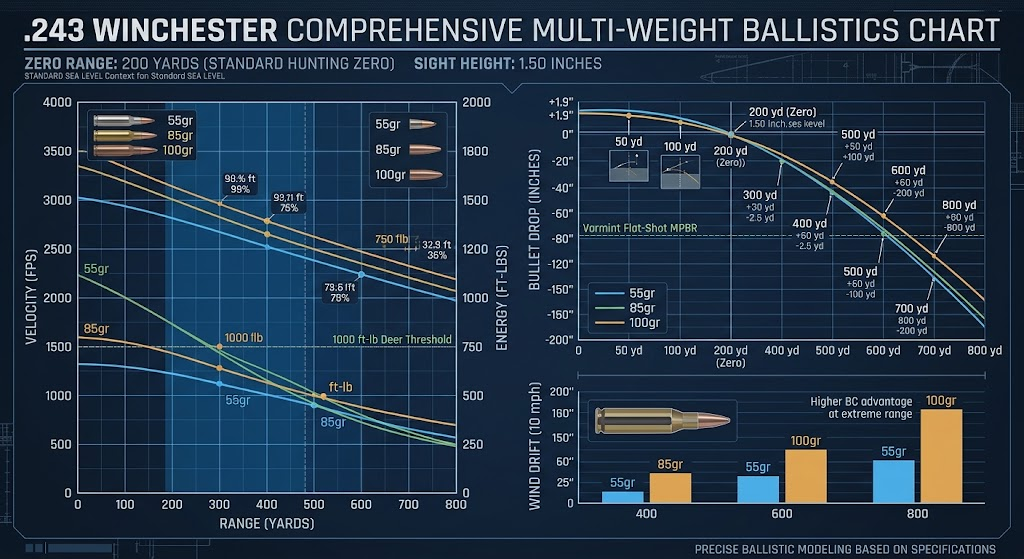
Here are the separate .243 Winchester bullet drop and trajectory tables, using the same supplied data and 200-yard zero. You can add these to your article as separate sections.
243 Ballistics Bullet Drop Chart
| Bullet Weight | 50 Yards | 100 Yards | 200 Yards | 300 Yards | 400 Yards | 500 Yards | 600 Yards | 700 Yards | 800 Yards |
|---|---|---|---|---|---|---|---|---|---|
| 55 grain | +0.4″ | +1.2″ | 0″ | -5.2″ | -16.8″ | -37.2″ | -70.4″ | -122.2″ | -199.1″ |
| 58 grain | +0.4″ | +1.3″ | 0″ | -5.1″ | -16.3″ | -35.8″ | -67.2″ | -115.8″ | -187.5″ |
| 70 grain | +0.5″ | +1.4″ | 0″ | -5.7″ | -17.7″ | -37.8″ | -69.6″ | -116.0″ | -182.2″ |
| 75 grain | +0.5″ | +1.4″ | 0″ | -5.7″ | -17.5″ | -37.0″ | -67.5″ | -111.4″ | -173.3″ |
| 80 grain | +0.5″ | +1.5″ | 0″ | -5.9″ | -18.0″ | -38.2″ | -69.9″ | -115.6″ | -180.2″ |
| 85 grain | +0.5″ | +1.5″ | 0″ | -5.7″ | -17.0″ | -35.4″ | -63.7″ | -103.6″ | -159.2″ |
| 90 grain | +0.6″ | +1.7″ | 0″ | -6.1″ | -18.2″ | -37.7″ | -67.5″ | -109.3″ | -166.8″ |
| 95 grain | +0.6″ | +1.7″ | 0″ | -6.3″ | -18.6″ | -38.4″ | -68.7″ | -110.9″ | -168.9″ |
| 100 grain | +0.7″ | +1.9″ | 0″ | -7.2″ | -21.1″ | -43.7″ | -78.4″ | -127.2″ | -194.5″ |
243 Ballistics Trajectory Chart
| Bullet Weight | 50 Yards | 100 Yards | 200 Yards | 300 Yards | 400 Yards | 500 Yards | 600 Yards | 700 Yards | 800 Yards |
|---|---|---|---|---|---|---|---|---|---|
| 55 grain | +0.4″ | +1.2″ | 0″ | -5.2″ | -16.8″ | -37.2″ | -70.4″ | -122.2″ | -199.1″ |
| 58 grain | +0.4″ | +1.3″ | 0″ | -5.1″ | -16.3″ | -35.8″ | -67.2″ | -115.8″ | -187.5″ |
| 70 grain | +0.5″ | +1.4″ | 0″ | -5.7″ | -17.7″ | -37.8″ | -69.6″ | -116.0″ | -182.2″ |
| 75 grain | +0.5″ | +1.4″ | 0″ | -5.7″ | -17.5″ | -37.0″ | -67.5″ | -111.4″ | -173.3″ |
| 80 grain | +0.5″ | +1.5″ | 0″ | -5.9″ | -18.0″ | -38.2″ | -69.9″ | -115.6″ | -180.2″ |
| 85 grain | +0.5″ | +1.5″ | 0″ | -5.7″ | -17.0″ | -35.4″ | -63.7″ | -103.6″ | -159.2″ |
| 90 grain | +0.6″ | +1.7″ | 0″ | -6.1″ | -18.2″ | -37.7″ | -67.5″ | -109.3″ | -166.8″ |
| 95 grain | +0.6″ | +1.7″ | 0″ | -6.3″ | -18.6″ | -38.4″ | -68.7″ | -110.9″ | -168.9″ |
| 100 grain | +0.7″ | +1.9″ | 0″ | -7.2″ | -21.1″ | -43.7″ | -78.4″ | -127.2″ | -194.5″ |
243 Ballistics 100 Grain
The 100-grain bullet is a common choice for the .243 Winchester, particularly for hunting applications where a heavier bullet is preferred. Its actual performance depends on the ammunition load, bullet design, barrel length, and environmental conditions.
According to the supplied reference data, the 100-grain load starts at an estimated muzzle velocity of 2,960 feet per second. The table below shows its listed performance at selected distances with a 200-yard zero.
| Distance (yards) | Velocity (fps) | Energy (ft-lb) | Trajectory (inches) | Wind Drift (inches) |
|---|---|---|---|---|
| 50 | 2,823 | 1,769 | +0.7 | 0.2 |
| 100 | 2,691 | 1,608 | +1.9 | 0.6 |
| 200 | 2,437 | 1,319 | 0.0 | 2.2 |
| 300 | 2,194 | 1,068 | -7.2 | 5.2 |
| 400 | 1,962 | 855 | -21.1 | 9.8 |
| 500 | 1,743 | 674 | -43.7 | 16.0 |
| 600 | 1,538 | 525 | -78.4 | 24.1 |
| 700 | 1,350 | 405 | -127.2 | 34.6 |
| 800 | 1,182 | 310 | -194.5 | 47.9 |
The listed figures show a gradual reduction in velocity and energy as the bullet travels farther. Trajectory and wind drift also increase with distance. Actual results can differ considerably between factory loads, so check the published data for the exact ammunition being used.
243 Ballistics 200 Yard Zero
A 200-yard zero means the rifle’s sights are adjusted so the bullet’s path intersects the point of aim at 200 yards under the specified conditions. The bullet may travel above or below the line of sight at other distances.
In the supplied reference chart, the trajectory is listed as zero at 200 yards for every bullet weight. The values at 50 and 100 yards show the listed height above the line of sight, while the negative values beyond 200 yards represent the listed drop below it.
| Bullet Weight | 50 Yards | 100 Yards | 200 Yards | 300 Yards | 400 Yards |
|---|---|---|---|---|---|
| 55 gr | +0.4 in | +1.2 in | 0.0 in | -5.2 in | -16.8 in |
| 58 gr | +0.4 in | +1.3 in | 0.0 in | -5.1 in | -16.3 in |
| 70 gr | +0.5 in | +1.4 in | 0.0 in | -5.7 in | -17.7 in |
| 75 gr | +0.5 in | +1.4 in | 0.0 in | -5.7 in | -17.5 in |
| 80 gr | +0.5 in | +1.5 in | 0.0 in | -5.9 in | -18.0 in |
| 85 gr | +0.5 in | +1.5 in | 0.0 in | -5.7 in | -17.0 in |
| 90 gr | +0.6 in | +1.7 in | 0.0 in | -6.1 in | -18.2 in |
| 95 gr | +0.6 in | +1.7 in | 0.0 in | -6.3 in | -18.6 in |
| 100 gr | +0.7 in | +1.9 in | 0.0 in | -7.2 in | -21.1 in |
These figures illustrate how the listed trajectory changes with bullet weight. A 200-yard zero does not guarantee identical performance from different rifles or ammunition brands. Confirm the actual point of impact at a suitable range before using the rifle in the field.
243 Ballistics at 50 Yards: 100-Grain Bullet
The 50-yard point of impact can help show how a 100-grain .243 Winchester load behaves at a shorter distance when the rifle is configured for a 200-yard zero. The supplied chart lists the bullet at 0.7 inches above the line of sight at 50 yards.
| Parameter | Supplied Reference Value |
|---|---|
| Bullet weight | 100 grains |
| Reference muzzle velocity | 2,960 fps |
| Velocity at 50 yards | 2,823 fps |
| Energy at 50 yards | 1,769 ft-lb |
| Trajectory at 50 yards | +0.7 inches |
| Wind drift at 50 yards | 0.2 inches |
| Zero distance | 200 yards |
These values are estimates and may not match a particular rifle’s point of impact. Sight height, ammunition specifications, barrel length, and the actual zeroing process all influence the results. Use the manufacturer’s trajectory information as a starting point and verify the rifle’s point of impact on the range.
Comparing 243 Bullet Weights
Bullet weight is one of several factors that influence the performance of a .243 Winchester load. The lightest bullets in the supplied data have higher listed starting velocities, while heavier bullets generally begin at lower velocities. However, bullet construction and ballistic coefficient also affect retained velocity, energy, and wind drift.
- 55 to 58 grains: These lighter bullets have high listed starting velocities and may be used in suitable varmint-oriented loads.
- 70 to 80 grains: These weights provide a middle range of bullet options, with performance varying by bullet design and intended use.
- 85 to 95 grains: These heavier options may offer different combinations of retained velocity and energy depending on their ballistic coefficients.
- 100 grains: This is a widely recognised bullet weight for the .243 Winchester and is commonly associated with hunting-oriented ammunition.
Bullet weight alone does not determine accuracy or suitability. Always check that the ammunition matches the rifle’s specifications and the intended application.
Understanding Bullet Drop and Wind Drift
Bullet drop describes the vertical change in a bullet’s path relative to the line of sight. Once a bullet leaves the barrel, gravity affects its flight, while its velocity decreases because of air resistance. The trajectory depends on the bullet’s initial velocity, ballistic coefficient, zero distance, sight height, and atmospheric conditions.
Wind drift is the sideways movement caused by wind during flight. A longer flight time generally gives the wind more opportunity to move the bullet. The figures in the main chart assume a 10 mph crosswind, but actual drift changes with wind speed, direction, terrain, and other conditions.
Velocity and energy figures also depend on the exact ammunition load. Published muzzle velocity is commonly measured under specified test conditions, and a different barrel length can produce different results. For that reason, a generic chart should not replace manufacturer data or measurements from the rifle being used.
Frequently Asked Questions
What is the effective range of a .243 Winchester?
The practical range depends on the ammunition, rifle, shooter’s ability, conditions, and intended use. Hunting range also depends on maintaining adequate performance and making a responsible shot. A single distance cannot apply to every .243 Winchester load.
What grain bullet is commonly used in a .243 Winchester?
Common factory ammunition includes bullet weights such as 55, 70, 80, 85, 90, 95, and 100 grains. Availability varies by manufacturer and bullet type.
How much does a .243 bullet drop at 300 yards?
The supplied reference chart lists 300-yard trajectory values ranging from approximately 5.1 to 7.2 inches below the line of sight across the listed bullet weights. The exact value depends on the load and the zeroing conditions.
What does a 200-yard zero mean?
A 200-yard zero means the rifle’s point of aim and the bullet’s path intersect at 200 yards under the specified setup. The trajectory at closer and farther distances can differ depending on the ammunition and rifle.
Is a 100-grain bullet suitable for the .243 Winchester?
A 100-grain bullet is a common .243 Winchester option, including in hunting-oriented factory ammunition. Suitability depends on the bullet’s construction, the intended use, and the rifle manufacturer’s specifications.
Does a heavier .243 bullet always retain more energy?
No. Retained energy depends on both bullet weight and velocity. Bullet design and ballistic coefficient affect how quickly velocity decreases, so a heavier bullet does not automatically retain more energy at every distance.
How does wind affect .243 ballistics?
Crosswind can move the bullet sideways during flight. The amount of drift depends on wind speed and direction, distance, velocity, bullet design, and atmospheric conditions. The chart’s wind figures assume a 10 mph crosswind and are estimates.
Why can my .243 ballistics differ from a published chart?
Differences can result from barrel length, ammunition lot, actual muzzle velocity, bullet design, temperature, elevation, atmospheric pressure, sight height, and zero distance. Published figures are reference estimates rather than a guarantee of individual rifle performance.
Are .243 ballistics charts accurate for every rifle?
No. Charts are based on stated assumptions and a particular load or ballistic model. Actual results can differ, so use the ammunition manufacturer’s data and verify performance with the specific rifle and load.
What information should I check before using a .243 ballistics chart?
Check the exact cartridge and ammunition, bullet weight, published muzzle velocity, ballistic coefficient, zero distance, sight height, and environmental assumptions. Treat estimated figures cautiously and confirm the rifle’s actual point of impact before relying on the chart.