A Hornady 17 HMR Trajectory Chart is a vital reference for rimfire shooters needing to understand the flat-shooting characteristics and rapid terminal performance of this high-velocity cartridge at distances from 50 to 200 yards. Known for its explosive speed and minimal bullet drop, the 17 HMR is a popular choice for small varmint and predator control where precision is paramount. By utilizing verified factory data for Hornady’s proprietary loads, shooters can accurately calculate the holdover required to compensate for gravity across the cartridge’s effective range. Mastering these ballistic figures ensures consistent shot placement and maximizes the effectiveness of your rimfire rifle setup in the field.
Table of Contents [Click to minimize]
Hornady 17 HMR Trajectory Chart
| Load Name | Weight (gr) | Type | BC | MV (fps) | 50y Drop | 100y Drop | 150y Drop | 200y Drop | Zero (y) |
| Varmint Express | 17 | V-MAX | 0.125 | 2550 | +0.4 | 0.0 | -2.6 | -8.1 | 100 |
| Varmint Xpress | 20 | XTP | 0.120 | 2375 | +0.5 | 0.0 | -3.1 | -9.6 | 100 |
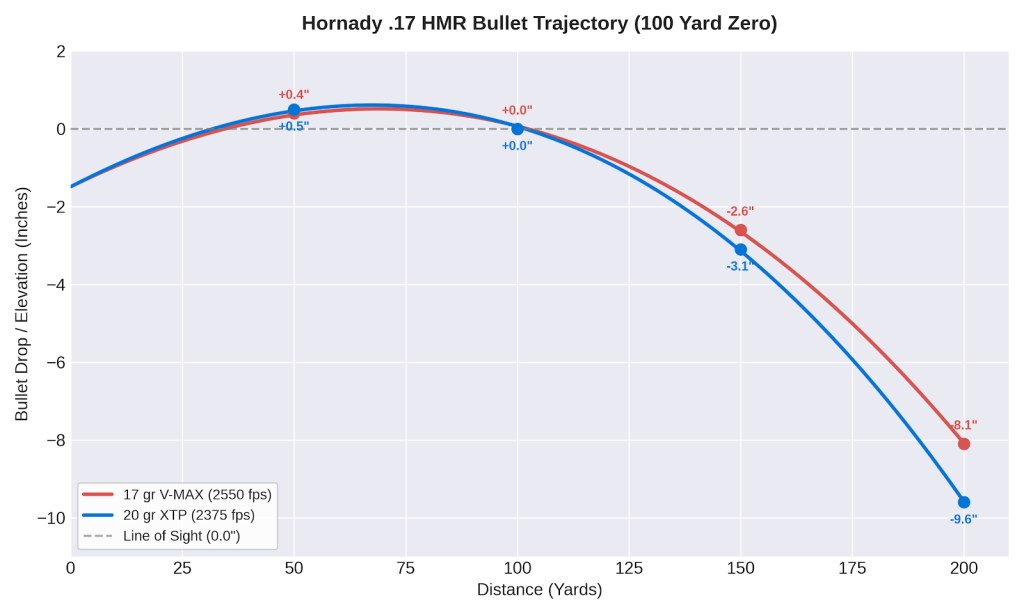
To use this chart, identify the specific Hornady ammunition load you are using and confirm your zero distance. With a 100-yard zero established, the drop values provided indicate the total vertical deviation in inches from the point of aim. For example, the 17 grain V-MAX load drops only 2.6 inches at 150 yards, making it an exceptionally flat-shooting rimfire option. Always keep in mind that the 17 HMR is a lightweight projectile and is highly susceptible to wind drift, which often becomes a greater factor for missing targets than vertical bullet drop at distances beyond 100 yards.
Understanding The Hornady 17 HMR Trajectory Chart
The data provided in the table acts as your baseline for ballistic planning. Understanding these values helps you anticipate how different bullet weights react to gravity over relatively short distances.
Trajectory Analysis
The 17 HMR trajectory is exceptionally flat due to its high muzzle velocity. Comparing the 17 grain V-MAX to the 20 grain XTP shows the importance of bullet profile; at 200 yards, the lighter 17 grain load drops 8.1 inches, while the heavier 20 grain load drops 9.6 inches. This demonstrates that the 17 grain load is the superior choice for shooters who prioritize a flatter flight path for longer-range rimfire engagement.
Velocity Analysis
Muzzle velocity is the defining characteristic of the 17 HMR. The 17 grain V-MAX launches at 2550 fps, which produces a very flat trajectory that stays within a few inches of the line of sight for most of the cartridge’s effective range. The 20 grain XTP starts slightly slower at 2375 fps, which results in more pronounced drop at the 150 and 200-yard marks.
Ballistic Coefficient Analysis
Ballistic coefficient (BC) measures how efficiently a bullet slices through the air. The 17 grain V-MAX has a BC of 0.125, allowing it to retain velocity better than the 20 grain XTP with its 0.120 value. This small difference is the primary reason the lighter bullet performs better in terms of vertical drop at distances past 100 yards.
Best Loads Based On The Chart
For varmint hunting at ranges up to 150 yards, the 17 grain Hornady V-MAX is the top choice, providing the flattest trajectory and explosive terminal performance. If your primary goal is small-game hunting where you want to minimize meat damage, the 20 grain XTP offers a more controlled expansion. For general target shooting where you want to maximize your effective range, the 17 grain V-MAX remains the most recommended load according to the trajectory data.
Key Takeaways From The Chart
The 17 grain V-MAX is the fastest and flattest shooting load at 2550 fps. The 100-yard zero provides the most predictable flight path for this cartridge, allowing for simple holdover adjustments at extended ranges. The drop at 200 yards is significant for such a fast rimfire, emphasizing that while the 17 HMR is capable at range, it is best utilized for targets within 150 yards to ensure clean, ethical shots.
Factors That Affect 17 HMR Trajectory
Wind
The 17 HMR is highly sensitive to crosswinds. Even a light breeze will push these lightweight bullets significantly off course, often more than the vertical drop would suggest. Always adjust for wind before vertical holdover when shooting at distances over 100 yards.
Temperature
Extreme temperature changes can affect both the muzzle velocity and air density. In colder temperatures, the air is denser, which creates more drag and causes the bullet to hit lower than the chart indicates.
Zero Distance
A 100-yard zero is the standard for the 17 HMR. Using a 50-yard zero would force the shooter to compensate with significant holdovers at any distance beyond 75 yards, which is inefficient for this caliber.
Frequently Asked Questions
Is the 17 HMR good for hunting?
Yes, it is excellent for small varmints and predators, providing great accuracy and terminal effectiveness at reasonable ranges.
What is the ideal engagement range?
The 17 HMR is best used for targets within 150 yards.
Why does my 17 HMR hit low at long range?
This is usually due to the bullet’s rapid loss of velocity at distances beyond 100 yards, combined with the bullet’s light weight.
Is the 17 HMR accurate at 200 yards?
It can hit targets at 200 yards, but it is challenging due to the significant drop and high susceptibility to wind.
What zero distance is recommended?
A 100-yard zero is widely considered the best setup for the 17 HMR.
Does barrel length change 17 HMR ballistics?
Yes, a longer barrel will typically provide slightly higher muzzle velocity than a short-barreled rifle.
Are Hornady loads consistent?
Yes, Hornady ammunition is highly regarded for its consistency and quality in the 17 HMR caliber.
Can I use the 17 HMR for target shooting?
Absolutely; it is very popular for rimfire precision shooting and plinking.
Does wind affect 17 HMR a lot?
Yes, it is very sensitive to wind compared to larger centerfire cartridges.
Why is 17 HMR so fast?
It is essentially a necked-down 22 Magnum case firing a much lighter, more aerodynamic bullet, which allows it to reach very high velocities.
How would you like to proceed with your ballistics website development, or is there another cartridge trajectory chart you would like me to generate for your database?