The debate between 9mm Luger and .40 S&W is one of the most heavily analyzed topics in defensive ballistics. Developed for the FBI in the 1990s, the .40 S&W was designed to bridge the gap between the higher magazine capacity of the 9mm and the heavy stopping power of the .45 ACP. Today, modern hollow-point technology has narrowed the terminal performance gap between these two rounds, shifting the conversation toward recoil management and capacity rather than just raw kinetic energy.
Ballistics Comparison Table
Here is a look at how standard defensive jacketed hollow point (JHP) loads stack up against each other out of a full-size handgun:
| Metric | 9mm (124 gr JHP) | .40 S&W (165 gr JHP) | .40 S&W (180 gr JHP) |
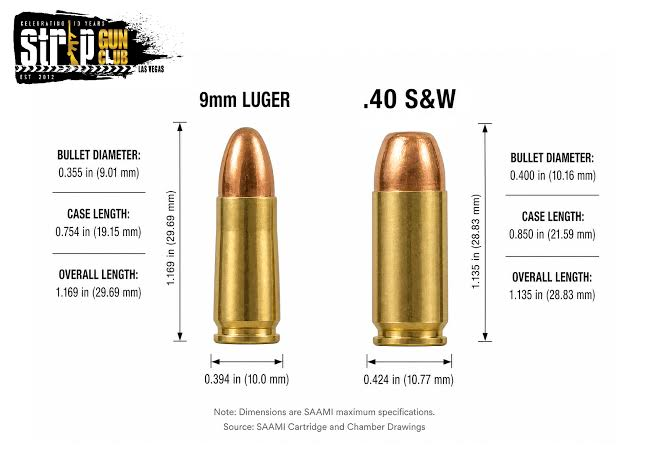
| Bullet Diameter | 0.355 inches | 0.400 inches | 0.400 inches |
| Muzzle Velocity | ~1,120 fps | ~1,050 fps | ~990 fps |
| Muzzle Energy | ~345 ft-lbs | ~404 ft-lbs | ~392 ft-lbs |
| Recoil Impulse | Moderate | Sharp / Snappy | Heavy / Pushing |
| Standard Capacity | 17 rounds | 15 rounds | 15 rounds |
Explaining the Numbers
To understand how these cartridges perform, you have to look at how velocity and mass interact upon impact.
- Where the 9mm relies on lighter projectiles traveling at higher velocities to expand effectively, the .40 S&W leverages heavier, wider bullets to punch deeper and hit with more blunt force.
- In a direct 9mm vs .40 S&W matchup, the .40 caliber consistently generates about 15% to 20% more muzzle energy. Because the bullet starts out wider, this extra energy often translates to a slightly larger permanent wound cavity in ballistic gelatin.
- However, compared to the 9mm, the .40 S&W produces a significantly harsher recoil impulse. The higher pressure and heavier bullet create a “snappy” muzzle flip that makes it harder for the average shooter to reacquire their target quickly.
Because modern 9mm defensive rounds now consistently meet the FBI’s strict 12-to-18-inch penetration standards, many law enforcement agencies have reverted back to the 9mm. The reasoning is practical: the terminal ballistic advantage of the .40 S&W is ultimately marginal, where the 9mm’s benefits in lower recoil, faster follow-up shots, and higher magazine capacity make it more effective for putting rounds on target under stress.