The 224 Valkyrie Ballistics Chart is an incredibly detailed and highly comprehensive reference table that tracks the velocity, kinetic energy, trajectory curve, and wind drift of the modern 224 Valkyrie cartridge over various distances. By carefully reviewing this specific chart, you can visualize exactly how your heavy, high-ballistic-coefficient .224 caliber bullet will behave from the precise moment it leaves your barrel until it strikes a target hundreds or even thousands of yards downrange. This critical data allows you to accurately predict bullet drop, compensate for wind deflection, and verify that your projectile retains enough energy for an ethical kill on predators or medium game animals.
Shooters, hunters, reloaders, and modern sporting rifle enthusiasts use a 224 Valkyrie Ballistics Chart to unlock the absolute true potential of this revolutionary short-action cartridge. Introduced by Federal Premium in 2017, the 224 Valkyrie was specifically engineered to dominate the extreme long-range AR-15 market. By necking down the 6.8 SPC casing to accept aerodynamic .224 caliber projectiles, Federal created a cartridge that fits perfectly into standard MSR 15 magazines but remains supersonic well past 1,300 yards. By studying the numbers today, a dedicated predator hunter can confidently take a challenging shot on a coyote at six hundred yards. A recreational marksman uses the trajectory data to understand exactly how much to adjust their optic for hitting steel targets at one thousand yards with incredibly mild recoil. In this comprehensive guide, you will learn how to analyze ballistics data, choose the absolute best bullet weight for your specific needs, determine the ideal zero distance, and see exactly how this modern cartridge completely redefined the long-range capabilities of the AR-15 platform.
224 Valkyrie Ballistics Chart
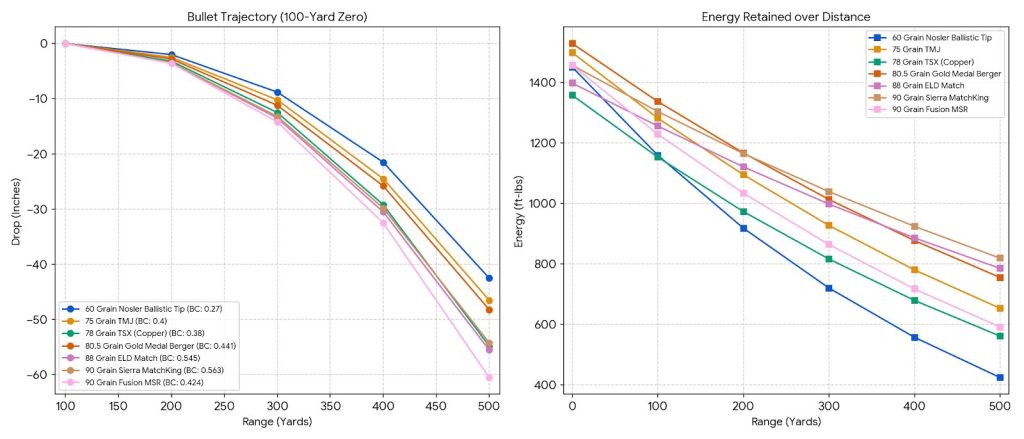
Below is a detailed ballistics table featuring the most popular and proven factory ammunition loads available for this modern cartridge today. The data represents a standard twenty-four-inch test barrel commonly utilized for maximum velocity extraction and assumes a one hundred yard zero. Atmospheric conditions are based on standard sea-level metrics.
| Bullet Weight | Bullet Type | Manufacturer | Muzzle Velocity | Velocity At 100 Yards | Velocity At 200 Yards | Velocity At 300 Yards | Velocity At 400 Yards | Velocity At 500 Yards | Muzzle Energy | Energy At 100 Yards | Energy At 200 Yards | Energy At 300 Yards | Energy At 400 Yards | Energy At 500 Yards | Trajectory At 100 Yards | Trajectory At 200 Yards | Trajectory At 300 Yards | Trajectory At 400 Yards | Trajectory At 500 Yards | Ballistic Coefficient | Sectional Density |
| 60 Grain | Nosler Ballistic Tip | Federal Premium | 3300 fps | 2950 fps | 2625 fps | 2325 fps | 2045 fps | 1785 fps | 1451 ft lbs | 1159 ft lbs | 918 ft lbs | 720 ft lbs | 557 ft lbs | 424 ft lbs | 0 inches | 2.0 inches drop | 8.8 inches drop | 21.5 inches drop | 42.5 inches drop | 0.270 | 0.171 |
| 75 Grain | TMJ | Federal American Eagle | 3000 fps | 2775 fps | 2565 fps | 2360 fps | 2165 fps | 1980 fps | 1499 ft lbs | 1282 ft lbs | 1095 ft lbs | 927 ft lbs | 780 ft lbs | 653 ft lbs | 0 inches | 2.5 inches drop | 10.2 inches drop | 24.5 inches drop | 46.5 inches drop | 0.400 | 0.214 |
| 78 Grain | TSX (Copper) | Federal Premium | 2800 fps | 2580 fps | 2370 fps | 2170 fps | 1980 fps | 1800 fps | 1358 ft lbs | 1153 ft lbs | 973 ft lbs | 816 ft lbs | 679 ft lbs | 561 ft lbs | 0 inches | 3.2 inches drop | 12.5 inches drop | 29.2 inches drop | 54.8 inches drop | 0.380 | 0.222 |
| 80.5 Grain | Gold Medal Berger | Federal Premium | 2925 fps | 2735 fps | 2555 fps | 2380 fps | 2215 fps | 2055 fps | 1529 ft lbs | 1337 ft lbs | 1167 ft lbs | 1013 ft lbs | 877 ft lbs | 755 ft lbs | 0 inches | 2.8 inches drop | 11.2 inches drop | 25.8 inches drop | 48.2 inches drop | 0.441 | 0.229 |
| 88 Grain | ELD Match | Hornady | 2675 fps | 2535 fps | 2395 fps | 2260 fps | 2130 fps | 2005 fps | 1398 ft lbs | 1256 ft lbs | 1121 ft lbs | 998 ft lbs | 886 ft lbs | 785 ft lbs | 0 inches | 3.5 inches drop | 13.5 inches drop | 30.5 inches drop | 55.5 inches drop | 0.545 | 0.251 |
| 90 Grain | Sierra MatchKing | Federal Premium | 2700 fps | 2555 fps | 2415 fps | 2280 fps | 2150 fps | 2025 fps | 1457 ft lbs | 1304 ft lbs | 1165 ft lbs | 1039 ft lbs | 924 ft lbs | 819 ft lbs | 0 inches | 3.5 inches drop | 13.2 inches drop | 29.8 inches drop | 54.2 inches drop | 0.563 | 0.256 |
| 90 Grain | Fusion MSR | Federal Premium | 2700 fps | 2480 fps | 2275 fps | 2080 fps | 1895 fps | 1720 fps | 1457 ft lbs | 1229 ft lbs | 1034 ft lbs | 864 ft lbs | 717 ft lbs | 591 ft lbs | 0 inches | 3.6 inches drop | 14.2 inches drop | 32.5 inches drop | 60.5 inches drop | 0.424 | 0.256 |
Understanding The Chart
A ballistics chart can look overwhelming at first glance due to the sheer volume of data presented. Breaking down each individual column reveals key information about how a specific load performs in the field. Understanding these distinct metrics is absolutely crucial for maximizing your success whether you are targeting predators or shooting steel at one thousand yards.
Muzzle Velocity
Muzzle velocity is the exact speed at which the bullet exits the barrel of the firearm, measured in feet per second. Because the 224 Valkyrie utilizes the wider 6.8 SPC casing, it holds a generous powder charge capable of pushing heavy .224 caliber bullets at impressive speeds while maintaining low chamber pressures safe for the AR-15 platform. Lightweight 60-grain bullets launch at a blistering 3,300 feet per second, while massive 90-grain bullets comfortably leave the barrel at 2,700 feet per second.
Retained Velocity
Retained velocity refers to the speed of the bullet at specific distances downrange. Air resistance constantly slows the bullet down as it travels through the atmosphere. This is where the 224 Valkyrie completely separates itself from traditional AR-15 cartridges like the .223 Remington. Thanks to the incredibly high-ballistic-coefficient bullets (specifically the 88 and 90-grain options), the 224 Valkyrie retains its speed flawlessly, remaining completely supersonic past 1,300 yards.
Kinetic Energy
Kinetic energy is the amount of destructive physical force the bullet carries, measured in foot-pounds. It is calculated utilizing the weight of the bullet and its velocity at any given distance. The 224 Valkyrie generates roughly 1,400 to 1,500 foot-pounds of energy at the muzzle. Because the heavy aerodynamic bullets cut through the air so efficiently, they retain highly lethal kinetic energy for predator hunting well beyond 500 yards.
Trajectory
Trajectory indicates the actual physical path the bullet takes as it flies through the air, factoring in the constant downward pull of gravity. The 224 Valkyrie Trajectory Chart displays the bullet drop in inches at various yardages relative to a 100-yard zero line of sight. While the 90-grain bullets launch slower than traditional lightweight varmint rounds, their aerodynamic efficiency allows them to shoot remarkably flat at extreme distances, dramatically reducing the elevation adjustments required for 1,000-yard target engagements.
Ballistic Coefficient
The Ballistic Coefficient (BC) is a numerical value representing how efficiently a bullet cuts through the air. A higher number means the bullet is more aerodynamic. High BC bullets resist wind drift much better than bullets with a lower rating. The absolute hallmark of the 224 Valkyrie is its ability to seat extremely long, heavy-for-caliber bullets (BCs exceeding 0.540) completely within the restrictive confines of an AR-15 magazine.
Sectional Density
Sectional density is the ratio of a bullet’s weight compared directly to its diameter. This metric is a strong indicator of how deeply a bullet will penetrate a target. Because this cartridge fires extremely heavy projectiles in a slender .224-inch diameter, the bullets possess excellent sectional density (up to 0.256), allowing expanding hunting bullets to penetrate deeply through tough muscle and bone on medium-sized game animals like whitetail deer and feral hogs.
Common 224 Valkyrie Bullet Weights
The cartridge is incredibly versatile, largely due to the wide variety of premium bullet weights it can fire accurately from a standard AR-15 platform. Selecting the proper bullet weight is a critical decision for anyone looking to maximize the potential of this caliber.
60 Grain
The 60-grain bullet is among the absolute lightest options practically available for the 224 Valkyrie. Bullets like the Nosler Ballistic Tip offer blisteringly fast muzzle velocities reaching 3,300 feet per second. This weight is explicitly utilized for dedicated varmint and predator hunting across open agricultural fields where explosive fragmentation and laser-flat trajectories inside 400 yards are highly preferred.
75 to 78 Grain
The 75 to 78-grain category includes standard full metal jacket target loads for affordable range practice, as well as premium solid copper monolithic bullets like the Barnes TSX. Because solid copper is lighter than traditional lead, these 78-grain bullets are naturally longer and retain nearly one hundred percent of their weight upon impact. They provide incredibly deep penetration on medium game while remaining legally compliant in lead-free hunting zones.
80.5 Grain
The 80.5-grain category is heavily dominated by premium match bullets like the Berger Gold Medal. This weight bridges the gap perfectly between high muzzle velocity and excellent long-range wind resistance. It shoots exceptionally accurately and is highly favored by competitive marksmen who want a slightly flatter trajectory inside 600 yards before stepping up to the heaviest bullet classes.
88 to 90 Grain
The 88 to 90-grain bullets represent the absolute gold standard and primary reason the 224 Valkyrie exists. Massive projectiles like the Hornady ELD Match and Sierra MatchKing boast massive aerodynamic ratings. They require a very fast-twist barrel to stabilize properly but reward the shooter with extreme aerodynamic efficiency. They cut through the wind better than almost any other bullet capable of fitting into an AR-15 magazine, making them absolutely perfect for extreme long-range precision.
Effective Hunting Range
The 224 Valkyrie Effective Range is highly impressive, bringing bolt-action precision and medium-game hunting power into the modern sporting rifle platform.
Coyotes and Predators
When hunting coyotes, bobcats, and other predators, the 224 Valkyrie completely dominates the open plains. Because the bullets are highly aerodynamic and travel incredibly fast, they slice through the wind effortlessly. A highly skilled shooter can accurately harvest coyotes out to 800 yards. The energy transfer ensures instant ethical kills on fast-moving predators, making it one of the most effective dedicated AR-15 predator cartridges ever designed.
Whitetail Deer and Antelope
For whitetail deer and pronghorn antelope, this cartridge is highly effective out to 300 to 400 yards provided you use the correct ammunition. Hunters absolutely must use premium, controlled-expansion bullets in the 90-grain class (like the Federal Fusion MSR) or 78-grain solid copper bullets. Standard 90-grain MatchKing bullets are not designed for expansion and should not be used on deer. With proper bullet selection, it delivers deep penetration and excellent hydrostatic shock.
Wild Hogs
Feral hogs are extremely tough creatures wrapped in a thick shield of gristle and cartilage. The 224 Valkyrie is a highly capable hog hunting tool when using heavy bonded soft points or solid copper projectiles. The fast-handling characteristics of the AR-15 platform allow for rapid follow-up shots on moving sounders, while the heavy .224 bullets penetrate deeply enough to anchor large boars across massive agricultural fields.
Target and Long-Range Shooting
For recreational steel target shooting and precision rifle series (PRS) Gas Gun matches, the 224 Valkyrie is a phenomenal tool. It offers long-range ballistics that rival the 6.5 Creedmoor but generates virtually zero recoil. It is a fantastic option for ringing steel plates out to 1,000 yards and beyond, allowing the shooter to easily spot their own trace and impacts through the optic without the rifle jumping off target.
Factors That Affect 224 Valkyrie Ballistics
Ballistics numbers are never completely static. The exact data provided in any 224 Valkyrie Velocity Chart will change constantly based on environmental conditions and the physical characteristics of your specific rifle setup.
Barrel Length
Barrel length has a major direct impact on your final muzzle velocity. To achieve the advertised velocities of the 224 Valkyrie, a 24-inch barrel is typically required. While many hunters prefer the maneuverability of an 18-inch or 20-inch barrel on their AR-15, doing so will result in a velocity loss of roughly 25 to 35 feet per second per inch of barrel removed. This velocity loss will slightly increase your bullet drop at extreme distances.
Twist Rate
To properly stabilize the massive, long, aerodynamic 88 and 90-grain bullets that give this cartridge its legendary performance, your rifle barrel absolutely must utilize a very fast twist rate. Federal Premium explicitly designed the cartridge around a 1-in-7-inch twist rate. Some custom precision builders even recommend a 1-in-6.5-inch twist for 90-grain bullets in cold, dense air. A standard 1-in-9 twist barrel will fail miserably, causing the heavy bullets to tumble and keyhole on the target.
Altitude and Temperature
Shooting at high elevations dramatically improves your ballistic performance. Thin mountain air provides much less atmospheric resistance against the bullet, resulting in a flatter trajectory and less wind drift. Conversely, freezing winter temperatures slow down the powder burn rate and create denser air, which reduces muzzle velocity and significantly increases overall bullet drop.
Best Zero Distance
Selecting the optimal zero distance depends entirely on how you plan to use your AR-15 or bolt-action rifle in the field.
100 Yard Zero
The 100-yard zero is the absolute gold standard for precision shooters and long-range hunters who utilize modern rifle scopes with exposed tactical turrets. It provides a clean, perfect mathematical baseline, allowing the shooter to easily dial their scope turrets upward for any extended distance engagement (out to 1,000+ yards) without ever needing to hold under the target.
200 Yard Zero
For coyote and deer hunters who prefer a Maximum Point Blank Range (MPBR) strategy, a 200-yard zero is highly effective. A fast-moving 60-grain bullet zeroed at 200 yards will typically impact only about 1.5 inches high at 100 yards and drop just a few inches at 250 yards. This allows a hunter to aim dead-center on the vitals of a coyote out to nearly 300 yards without touching their scope turrets.
224 Valkyrie Ballistics Compared To Other Cartridges
To truly appreciate the brilliant engineering behind this modern AR-15 cartridge, we must compare it directly against its closest competitors in the gas-gun platform. Below is a detailed comparison outlining performance at 500 yards under standard sea-level conditions.
| Cartridge | Muzzle Velocity | Muzzle Energy | Trajectory At 500 Yards | Recoil | Effective Range | Receiver Platform |
| 224 Valkyrie (90gr) | 2700 fps | 1457 ft lbs | 54.2 inches drop | Very Light | 1000+ Yards | AR-15 |
| 223 Remington (77gr) | 2750 fps | 1293 ft lbs | 62.0 inches drop | Extremely Light | 600 Yards | AR-15 |
| 22 Nosler (77gr) | 2950 fps | 1488 ft lbs | 49.5 inches drop | Very Light | 800 Yards | AR-15 |
| 6.5 Grendel (123gr) | 2580 fps | 1818 ft lbs | 64.3 inches drop | Light | 800 Yards | AR-15 |
| 6mm ARC (108gr) | 2750 fps | 1813 ft lbs | 47.2 inches drop | Light | 1000+ Yards | AR-15 |
When compared to the standard .223 Remington (even loaded with heavy 77-grain match bullets), the 224 Valkyrie completely dominates at extended ranges. The .223 Remington simply lacks the case capacity to push heavy bullets fast enough to remain supersonic past 800 yards, while the Valkyrie effortlessly stays supersonic past 1,300 yards.
Against the 22 Nosler, the 224 Valkyrie trades a small amount of raw case capacity for better magazine geometry. The Valkyrie’s shorter case length allows the incredibly long 90-grain bullets to be seated properly while still fitting inside standard AR-15 magazines something the 22 Nosler struggles to do with the heaviest .224 bullets.
When stacked against the legendary 6.5 Grendel, the Valkyrie shoots significantly flatter and drifts less in the wind at extreme ranges due to its ultra-high BC projectiles. However, the 6.5 Grendel fires a much heavier bullet, retaining significantly more kinetic energy, making the Grendel a superior choice for hunting deer and medium game at intermediate ranges, while the Valkyrie remains the undisputed king of AR-15 long-range precision target shooting.
Frequently Asked Questions
What is a 224 Valkyrie Ballistics Chart?
It is a highly comprehensive reference table tracking the velocity, kinetic energy, trajectory curve, and wind drift of the cartridge over various distances. Shooters heavily rely on this specific data to calculate exact elevation drops and wind holds for extreme long-range target shooting and predator hunting.
Does the 224 Valkyrie fit in a standard AR-15?
Yes. The 224 Valkyrie was explicitly designed to function flawlessly in the standard MSR 15 (AR-15) platform. To convert a standard 5.56 NATO AR-15 to 224 Valkyrie, you only need to swap the barrel, use a 6.8 SPC bolt face, and utilize 6.8 SPC magazines. The upper and lower receivers remain completely identical.
How much does a 224 Valkyrie drop at 1000 yards?
With a standard 100-yard zero, a 90-grain Sierra MatchKing bullet fired at 2,700 fps will drop approximately 320 to 340 inches at 1,000 yards. It will retain roughly 1,250 fps of velocity, remaining comfortably supersonic at that extreme distance.
Is the 224 Valkyrie good for deer hunting?
Yes, provided you use the correct ammunition and keep shots within ethical distances (inside 400 yards). Loading the 224 Valkyrie with heavy, tough, controlled-expansion bullets like the 90-grain Federal Fusion MSR makes it a highly capable, low-recoil option for whitetail deer.
What is the best barrel twist rate for the 224 Valkyrie?
To maximize the performance of this modern cartridge and properly stabilize the incredibly long 88-grain and 90-grain bullets, you must utilize a fast barrel twist rate of 1-in-7 inches.
Conclusion
Understanding a 224 Valkyrie Ballistics Chart is absolutely essential for any shooter who wants to extract the absolute maximum long-range performance out of the AR-15 platform. By merging a highly efficient, high-capacity case with fast-twist barrels capable of launching heavy, aerodynamically perfect .224 caliber projectiles, Federal Premium completely solved the long-range trajectory and wind-drift limitations of the standard modern sporting rifle. Understanding its trajectory curvature, retained velocity, and energy transfer characteristics enables predator hunters and long-range precision shooters to extract maximum accuracy and extreme-distance performance from a platform known for virtually zero recoil.