The massive success of the Creedmoor case geometry has reshaped the entire landscape of modern rifle performance. By pulling back the case shoulders and optimizing internal powder dynamics, Hornady created a blueprint that modern builders love to neck down to smaller calibers. Two of the most impressive speed demons born from this evolution are the 22 Creedmoor and the 6mm Creedmoor. While they share the exact same parental DNA, they focus their energy in completely different directions. The 22 Creedmoor is a blistering hot-rod cartridge designed for vaporizing varmints and flattening trajectories with heavy .224-caliber projectiles. The 6mm Creedmoor is a highly refined competition specialist engineered to dominate precision steel matches while offering exceptional factory support.
Here is the direct side-by-side comparison of how these two flat-shooting cartridges match up across the metrics that matter most to shooters.
| Feature | 22 Creedmoor | 6mm Creedmoor |
| Bullet Diameter | .224 inches | .243 inches |
| Typical Bullet Weights | 75 gr to 90 gr | 103 gr to 115 gr |
| Muzzle Velocity | 3,150 to 3,450+ FPS | 2,950 to 3,100 FPS |
| Typical Twist Rate | 1:7 or 1:6.5 | 1:7.5 or 1:8 |
| Free Recoil Energy | Extremely Low (Under 5 ft-lbs) | Very Mild (Around 7 to 9 ft-lbs) |
| Expected Barrel Life | 1,000 to 1,800 Rounds | 1,500 to 2,500 Rounds |
| SAAMI Standardized | No (Wildcat / Semi-Custom) | Yes (Fully Standardized) |
| Primary Application | Precision Varmint and Medium Game | PRS/NRL Competition and Open Target |
Table of Contents [Click to open]
Bullet Profiles and the Caliber Split
The fundamental divide between these two cartridges comes down to bullet selection and terminal purpose.
The 22 Creedmoor takes the heavy-for-caliber approach to .224 diameter bullets. Instead of shooting the classic 55-grain bullets common to the 223 Remington, it is designed around heavy match projectiles ranging from 75 grains up to 90 grains. These sleek bullets give the 22 Creedmoor an elite ballistic footprint while maintaining high structural integrity.
The 6mm Creedmoor steps up to a .243 bullet diameter. This allows it to comfortably shoot much heavier match bullets, usually settling into the 105-grain to 115-grain sweet spot. The extra frontal surface area and weight mean that 6mm bullets inherently carry higher ballistic coefficients, making them noticeably more reliable at resisting external wind deflection at distances past 800 yards.
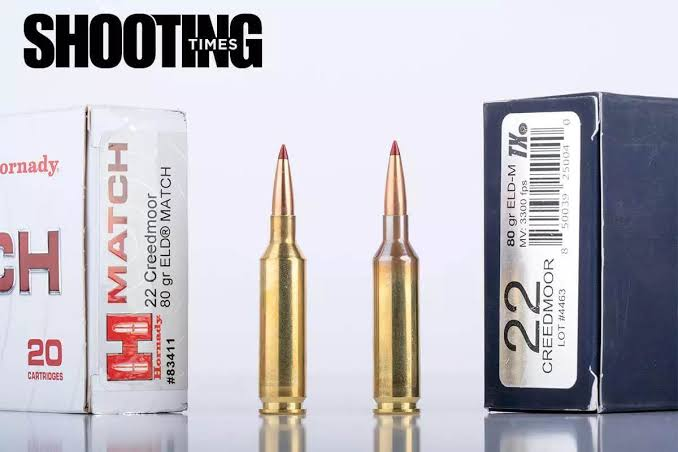
Speed and Trajectory: The 22 Creedmoor Velocity Show
If raw speed and a laser-flat trajectory inside 600 yards are your main priorities, the 22 Creedmoor is the clear victor. It routinely launches 80-grain projectiles at velocities exceeding 3,300 feet per second. When dropping down to a lighter 60-grain varmint bullet, it can easily push past 3,600 feet per second.
This extreme velocity creates an incredibly forgiving trajectory. For coyote hunters or varmint shooters who have to make rapid split-second shots without time to dial their elevation turrets, the 22 Creedmoor offers point-and-shoot simplicity at distances that would require significant scope holdovers with slower rounds.
The 6mm Creedmoor is certainly no slouch in the speed department. It routinely launches a 108-grain match bullet at roughly 3,000 feet per second. However, because it carries heavier mass, it trades away that initial blistering velocity for downrange momentum.
Competition Dynamics vs. Practical Hunting
In precision rifle competitions like the Precision Rifle Series (PRS), the 6mm Creedmoor is an absolute titan with massive factory backing.
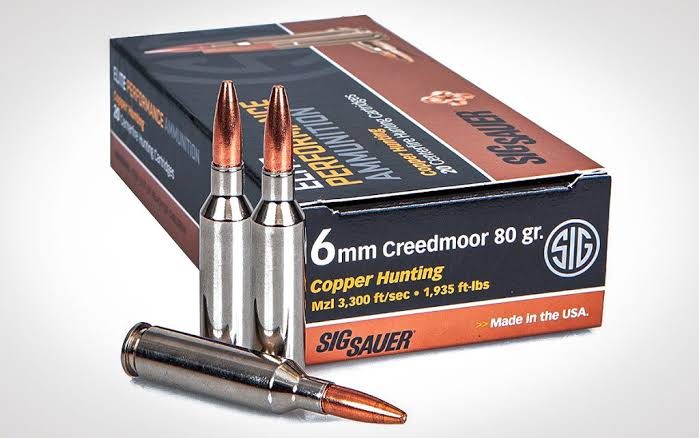
Because it is fully SAAMI standardized, you can walk into almost any major sporting goods store and find premium, match-grade box ammo ready to go. The 6mm Creedmoor complies perfectly with PRS rule constraints, feeds flawlessly from standard short-action AICS box magazines, and hits steel targets hard enough to give spotters an obvious visual indicator of a hit.
The 22 Creedmoor is currently treated more like a premium semi-wildcat or specialty option. While boutique loaders and top-tier brass manufacturers like Alpha Munitions provide superb components, off-the-shelf factory ammunition choices are far scarcer.
For hunting applications, the script flips slightly. The 22 Creedmoor has developed an enormous following among predator hunters who want maximum terminal devastation on coyotes at extreme ranges. With heavy hunting bullets like the 75-grain Hornady ELD-M or specialized solid copper projectiles, it also functions as an exceptionally flat-shooting, low-recoil meat-cutter for medium game like pronghorn and white-tailed deer.
The Cost of Performance: Barrel Longevity
Every shooter considering these two options must understand that extreme velocity comes with a direct physical cost at the rifle throat. Both of these cartridges burn a lot of powder relative to their bore diameters, meaning they generate immense plasma heat during ignition.
The Throat Erosion Reality: High powder volume combined with narrow bore diameters creates a blowtorch effect inside the barrel liner.
The 22 Creedmoor is a notorious barrel burner. Because it forces roughly 40 grains of powder through a tiny .224-inch opening, competitive match accuracy can begin to degrade anywhere between 1,000 and 1,500 rounds depending on how fast you string your shots together.
The 6mm Creedmoor fares slightly better. The larger .243-inch bore offers more surface area to distribute the hot gas, typically pushing competitive barrel life out to somewhere between 1,500 and 2,500 rounds. If you choose either of these rounds, you must accept that barrels will be treated as consumable items.
Final Decision Framework
Go with the 22 Creedmoor if:
You want the ultimate long-range varmint and coyote rifle. It is the perfect choice for an experienced handloader who wants a flat-shooting rifle with virtually zero recoil, laser-straight trajectories at unknown distances, and deep terminal energy transfer on medium-sized game animals.
Go with the 6mm Creedmoor if:
You want to participate in precision long-range target competitions without being forced to reload your own brass. The 6mm Creedmoor provides standard commercial availability, better overall barrel life, superior wind resistance beyond 800 yards, and flawless feeding right out of the box.